


What Clients Don’t See in Professional Event Production
When clients attend a polished event, they usually experience the final result: a smooth program, flawless visuals, and a well-timed flow. What most people don’t realize is that professional event production goes far beyond what happens on stage. Behind every successful event is a complex system of planning, coordination, and technical execution that remains invisible to attendees.
This hidden layer is where real value is created. From early planning meetings to last-minute technical adjustments, professional event production is built on preparation, precision, and experience. Understanding this process helps businesses appreciate why execution quality matters and why cutting corners often leads to failure.
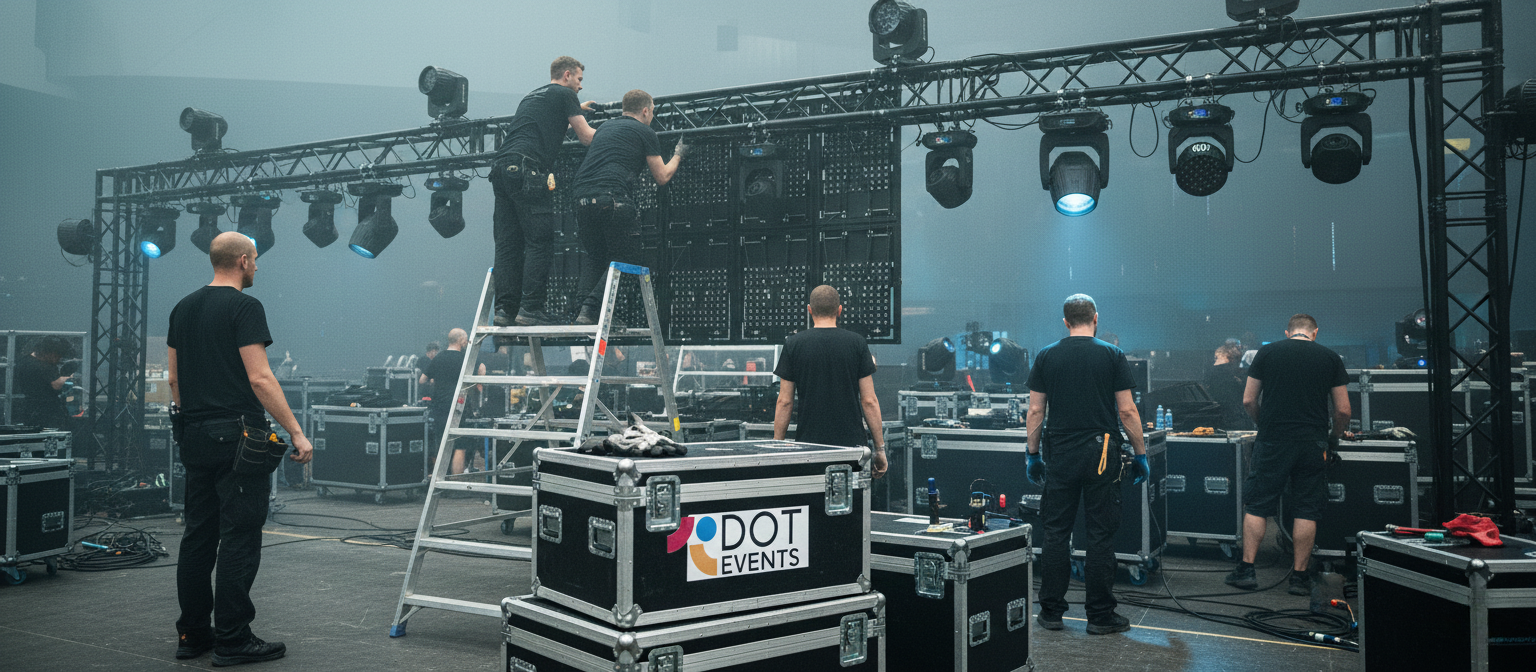
Behind the Scenes Event Production
Behind the scenes event production is where most of the real work happens. Long before guests arrive, teams are already managing schedules, technical layouts, and risk scenarios. Every decision made at this stage directly impacts how the event performs in real time.
A professional team maps out the event production process step by step, anticipating potential challenges and preparing backup solutions. This includes venue analysis, technical drawings, equipment testing, and timeline simulations that clients rarely see but always benefit from.
The Real Event Production Process
The event production process is not a single task, but a structured workflow that starts weeks — sometimes months — before the event day. This process includes planning, coordination, testing, rehearsals, and live execution, all working together to ensure the event runs without disruption.
In professional event production, every detail is documented. Technical riders, power requirements, equipment layouts, and run-of-show schedules are prepared and reviewed multiple times. This level of preparation is what separates professional teams from improvised setups.
Pre-Production: Where Success Is Built
Pre-production is the foundation of any successful event. During this stage, the event production process focuses on logistics, technical planning, and communication between all stakeholders. Venues are inspected, load-in paths are confirmed, and contingency plans are established.
This is also where experienced teams apply behind the scenes event production expertise. They identify risks early, align technical teams, and ensure that every supplier is synchronized with the overall event timeline.
Coordination Between Teams
One of the most overlooked elements in professional event production is team coordination. Audio, video, staging, content, and operations teams must work as a single unit. Any misalignment can cause delays, technical failures, or audience confusion.
That’s why professional teams rely on clear communication structures and detailed production schedules. This coordination is a critical part of the event production process and is rarely visible to clients, even though it directly affects the quality of the final experience.
When event production is handled correctly, clients experience confidence, reliability, and smooth execution — even though most of the work happens quietly in the background.
What Can Go Wrong Without Professional Event Production
When professional event production is missing, problems usually appear where clients least expect them. Technical failures, timing issues, and poor coordination are often the result of skipping proper planning within the event production process.
Many companies assume that event production only happens on the event day itself. In reality, most failures happen because behind the scenes event production was rushed, incomplete, or handled by inexperienced teams.
Last-Minute Changes and Technical Issues
Without a structured event production process, last-minute changes become chaotic. Lighting cues are not tested, audio systems are not balanced, and visual content may not be optimized for the venue.
In professional setups, these scenarios are anticipated early. Teams test systems multiple times and prepare backup plans. This level of preparation is a core element of professional event production, even though clients rarely see it.
Lack of On-Site Control
Another common issue is the absence of on-site production leadership. Without a dedicated production manager, decisions are delayed, responsibilities become unclear, and small issues escalate into major disruptions.
This is where behind the scenes event production plays a critical role. Professional teams operate with clear command structures, ensuring that every department knows exactly what to do — before, during, and after the event.
The Cost of Poor Planning
Poor planning often leads to higher costs, not savings. Emergency fixes, rushed equipment rentals, and overtime labor can quickly exceed the original budget.
A well-defined event production process prevents these surprises. By planning early and executing systematically, professional event production protects both the event quality and the client’s investment.
How Professional Event Teams Actually Work Behind the Scenes
What separates a smooth event from a stressful one is not what happens on stage, but how behind the scenes event production is managed from the very beginning.
In professional event production, every phase is documented, reviewed, and tested. Nothing is left to chance, and no detail is considered too small.
Pre-Production: Where Most of the Work Happens
Before the event day arrives, the event production process is already well underway. This phase includes technical planning, site visits, power calculations, equipment mapping, and rehearsals that clients rarely witness.
During pre-production, professional teams identify risks early. They test load capacities, simulate timing transitions, and align all departments to ensure that professional event production runs without surprises.
Live Execution Requires More Than Equipment
On the event day, execution is about coordination, not just technology. Lighting operators, audio engineers, stage managers, and content controllers must work in sync within a structured event production process.
This coordination is what defines true behind the scenes event production. Every cue, transition, and adjustment is communicated in real time, ensuring the event flows naturally for the audience.
Post-Event Breakdown and Evaluation
Once the event ends, professional event production does not stop. Equipment breakdown, safety checks, and performance reviews are all part of the process.
Professional teams evaluate what worked and what didn’t, feeding this knowledge back into future projects. This continuous improvement is a core strength of a mature event production process.
The Difference Between Visible Results and Invisible Effort
For most clients, success is measured by what the audience sees. However, real success in professional event production comes from the invisible effort that happens long before the doors open.
This is why experienced companies invest heavily in planning, testing, and coordination. Without a structured event production process, even the most impressive setup can fail under pressure.
Why Experience Matters in Professional Event Production
Working with a team that understands behind the scenes event production means fewer risks, faster problem-solving, and a smoother overall experience.
This level of execution is closely connected to full-scale event services in jordan , where technical planning, crew coordination, and production management work together as one system.
It also explains why companies that specialize in event production in jordan are able to deliver consistent results across conferences, launches, and large-scale corporate events.
The Role of Strategic Planning and Marketing Alignment
Professional event production is not isolated from marketing. Successful events are designed to support brand messaging, audience engagement, and long-term visibility.
That’s why many production teams collaborate closely with marketing experts, such as a digital marketing agency in jordan , to ensure the event experience aligns with broader brand and campaign goals.
This integration is especially important for organizations looking for corporate event management in jordan , where every detail reflects the company’s identity and values.
Frequently Asked Questions About Professional Event Production
What do clients usually not see in professional event production?
Clients usually do not see the extensive planning, technical testing, rehearsals, and risk management that happen behind the scenes before the event day.
Why is behind the scenes event production so important?
Behind the scenes event production ensures that all systems work together smoothly, reducing the risk of technical issues and last-minute failures during live events.
How does a structured event production process improve results?
A structured event production process allows teams to anticipate challenges, coordinate crews effectively, and deliver a consistent experience for both clients and audiences.
Is professional event production only about equipment?
No. Professional event production focuses on planning, people, timing, and execution, with equipment being just one part of a much larger system.