


The Engineering Guide to Professional Event Stage Design in Jordan
Designing and building a stage is the structural foundation of any major event, whether it is a corporate product launch, a massive outdoor festival, or an international summit. It is far more than simply providing an elevated platform for speakers; it is a complex engineering project that requires precise load calculations, structural safety, and optimal equipment distribution. For event organizers and large corporations, relying on a specialized company for event stage design in Jordan is a mandatory step. It ensures the construction of structures capable of safely bearing the massive weights of audio systems, lighting rigs, and giant LED screens, all while maintaining an aesthetic that reflects the event’s brand identity.
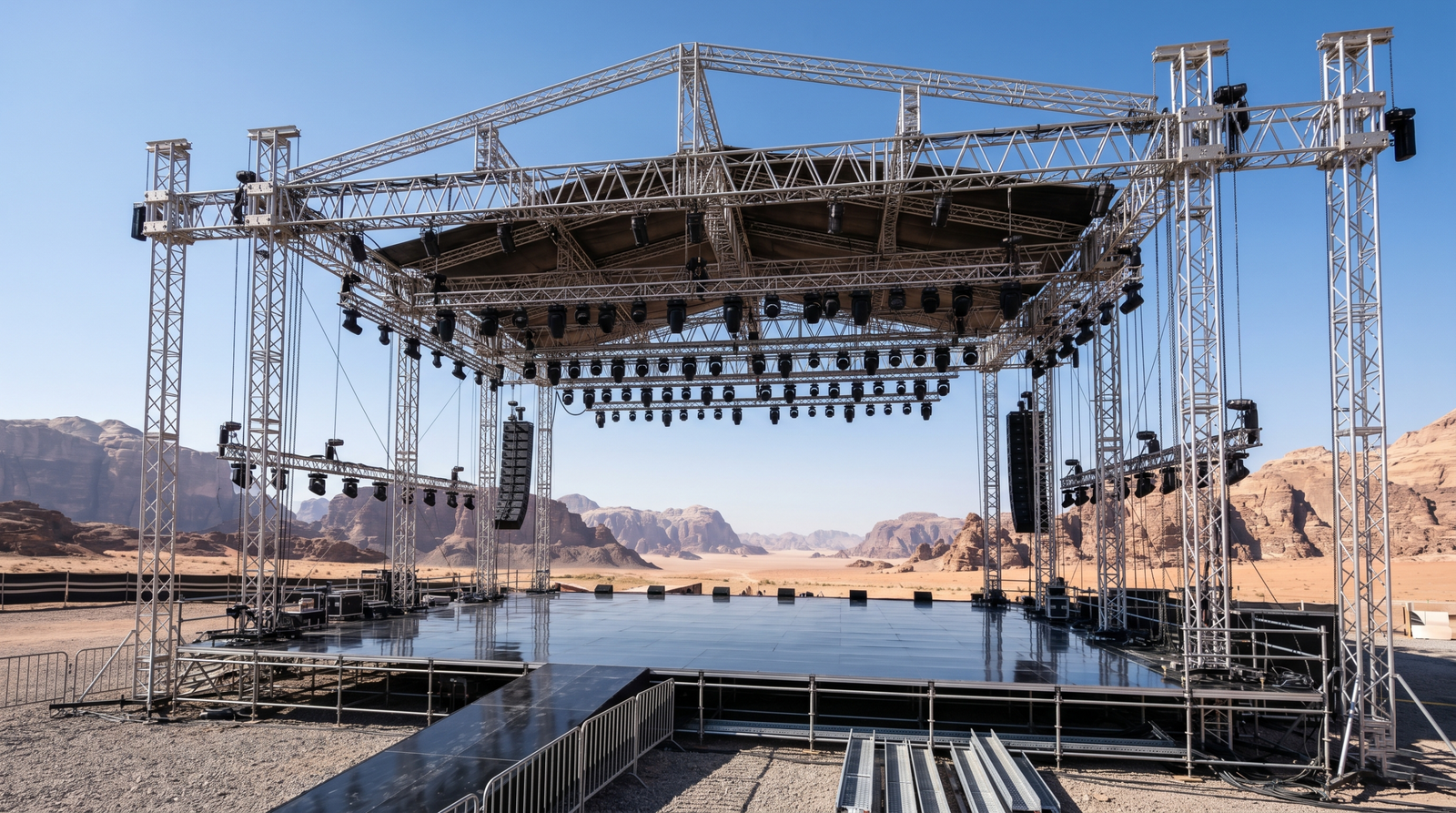
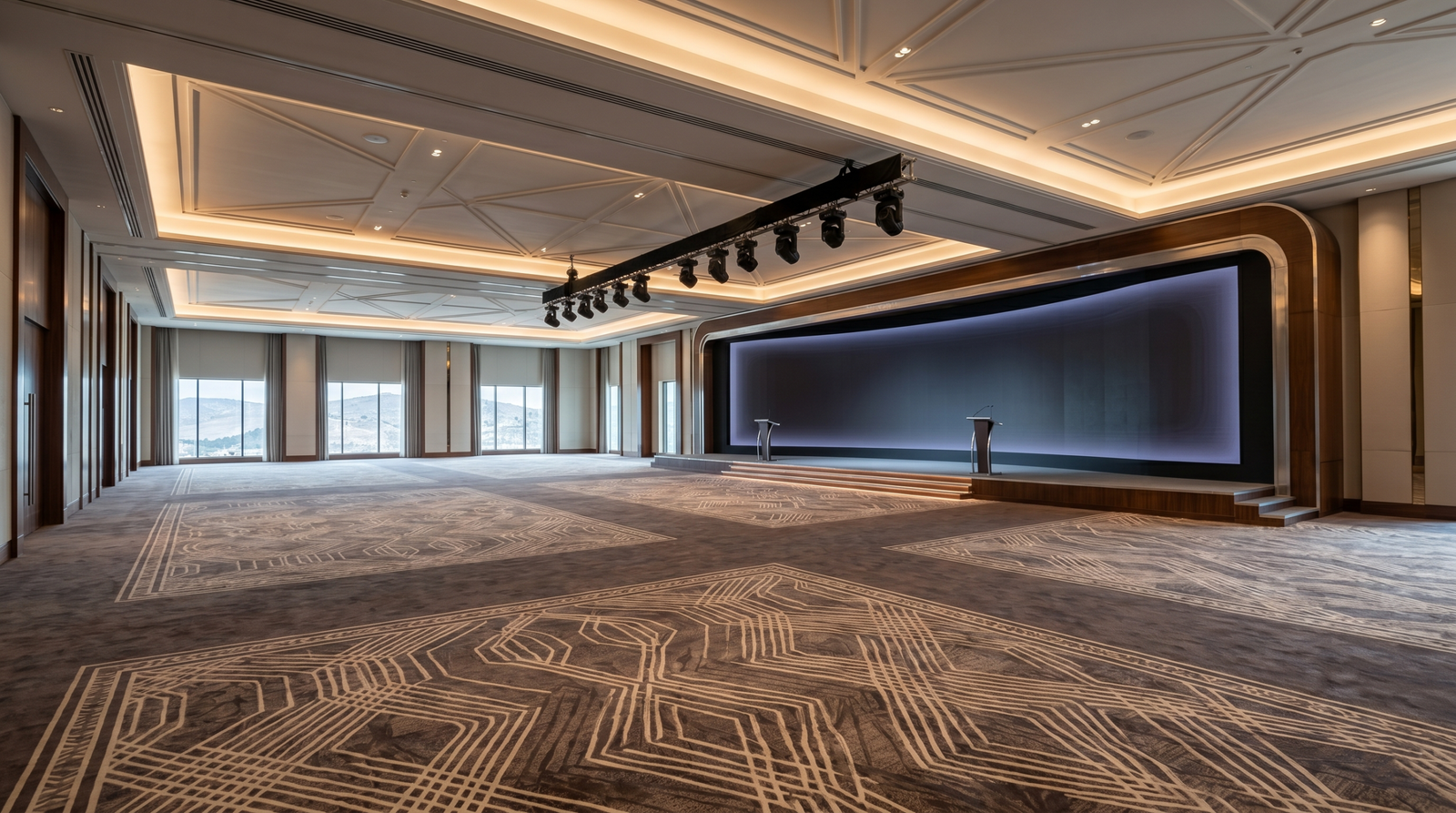
The technical requirements differ drastically between indoor stages in hotel ballrooms and outdoor stages exposed to wind and weather. Mega-events require heavy-duty aluminum truss systems engineered and assembled precisely to lift heavy technical gear (rigging). Any miscalculation or use of uncertified equipment can lead to catastrophic failures. Therefore, investing in solid stage infrastructure is a direct investment in risk management and overall event success.
Truss Systems Engineering and Technical Load Management
The fundamental difference between a standard riser and a professional stage lies in the rigging and trussing systems. Modern events rely heavily on massive LED video walls, suspended line array speakers, and hundreds of moving head lighting fixtures. This equipment constitutes enormous weight that requires an engineered infrastructure capable of supporting and distributing it correctly. Aluminum truss structures are assembled according to strict calculations to create arches or complete ground support roof systems above the stage.
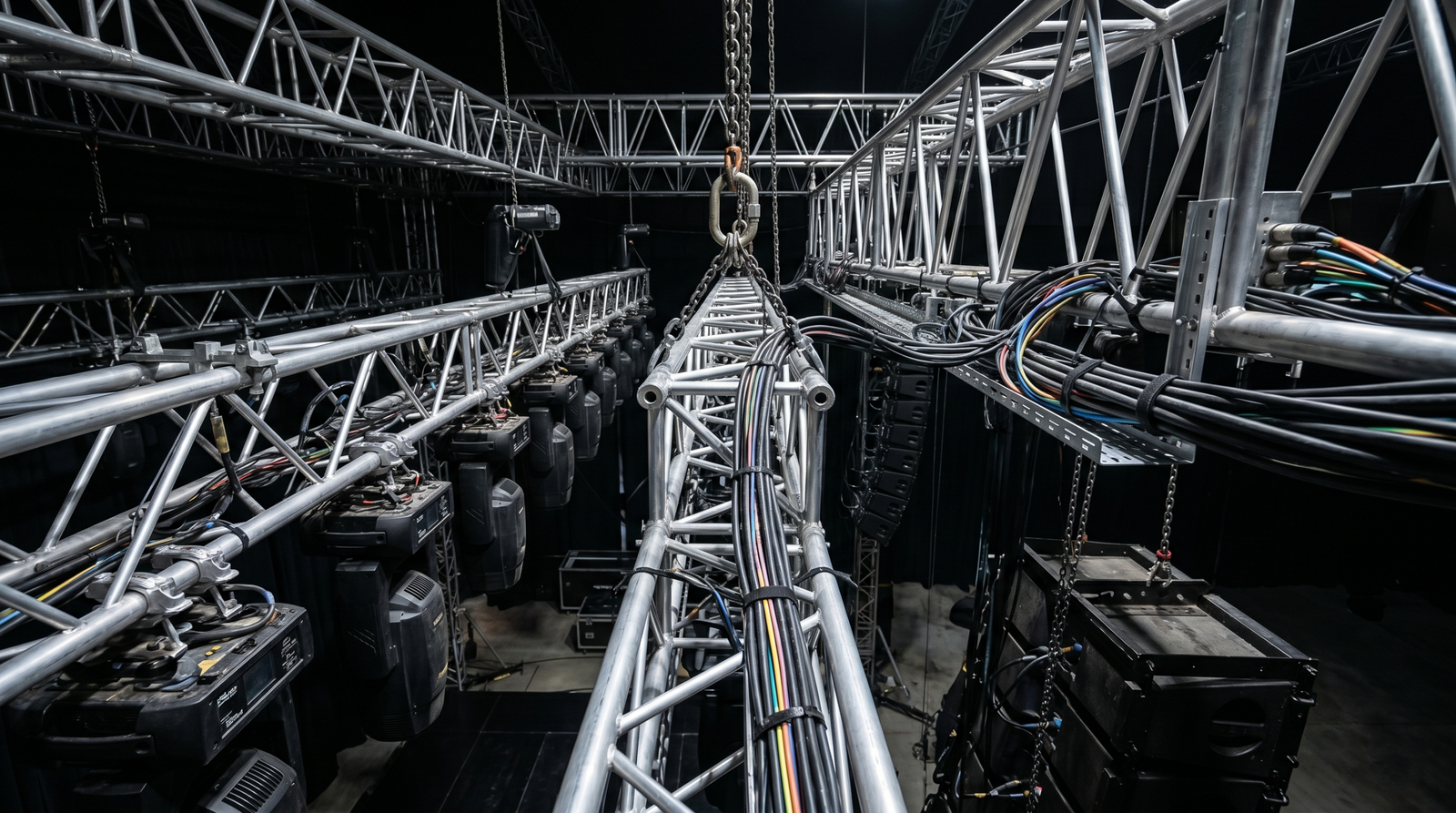
The rigging process leaves zero margin for error. These tasks are executed using heavy-duty electric chain hoists that comply with global safety standards. Properly engineering these structures not only serves safety purposes but also provides absolute flexibility to integrate comprehensive event audiovisual services. This allows for precise lighting direction and acoustic distribution covering the entire venue, without bulky ground stands obstructing the audience’s view or ruining the stage design.
Technical Challenges: Indoor vs. Outdoor Stages
Standardized engineering parameters cannot be applied universally to all event venues. The stage design and construction process varies radically based on the location’s nature. Stages built inside closed hotel ballrooms face entirely different challenges than those erected in open squares or desert areas in Jordan. Each environment demands independent planning to guarantee the highest levels of safety and visual quality.
| Comparison Point | Indoor Stages | Outdoor Stages |
|---|---|---|
| Rigging Points | Rely on existing load points in the venue ceiling, adhering strictly to maximum weight limits. | Require building a complete, self-sustaining Ground Support Roof System. |
| Weather Impact | Fully controlled environment (climate-controlled and protected from wind/rain). | Require precise calculations for wind loads and the use of IP-rated waterproof equipment. |
| Floor Leveling | Hotel floors are generally perfectly level and straightforward to build upon. | Require specialized steel leveling jacks to address uneven terrain and slopes. |
According to international standards set by leading audiovisual organizations such as AVIXA, compliance with load-bearing safety protocols is the dividing line between an event’s success and failure. Specifically for outdoor stages, we utilize reinforced aluminum structures and precise ballasts to ensure the stability of the stage and suspended rigs even in unpredictable weather conditions, providing a completely safe environment for technical crews and VIPs on the platform.
The Final Touches: Stage Finishing and Visual Integration
A solid steel or aluminum framework is the foundation, but the final appearance of the stage is what the audience sees. After the structural build is complete, the stage finishing phase begins. Bare metal legs or exposed cabling are unacceptable in a high-end corporate event. The entire stage surface is clad in materials matching the event’s identity, whether that means high-density premium carpets for official summits or glossy acrylic floors for modern product launches.
Beyond the flooring, the sides of the stage are enclosed with durable stage skirting or custom-built wooden fascia bearing the organizing company’s branding. These meticulous touches ensure all technical gear and wiring remain hidden beneath the deck, delivering a professional, clean look ready for high-definition television broadcasting and PR photography.
Conclusion: Securing Your Event’s Success with Infrastructure Experts
The decision to build a massive stage for your next event must be based on the technical and engineering readiness of the production company, not solely on cost. The stage is the beating heart of the event and the foundation upon which all visual and audio presentations rest. Investing in strong, meticulously planned infrastructure translates directly to peace of mind, attendee safety, and a visual impact worthy of your brand’s power.
At Dot Event, we possess the heavy equipment and engineering expertise to translate your creative vision into a safe, spectacular reality. Whether you are planning an international summit, a music festival, or a grand product launch, our team is ready to design and execute your next stage to the highest global standards.
Frequently Asked Questions
Why is it crucial to hire a specialized company for event stage design in Jordan instead of regular building contractors?
Event stage construction requires expertise in temporary engineering (rigging), precise load calculations for audio, lighting, and screens, and the use of globally certified aluminum truss systems to ensure absolute safety, which traditional contractors do not possess.
Can you build outdoor stages capable of withstanding harsh weather conditions?
Yes, we design and build complete Ground Support Systems for outdoor stages, incorporating precise calculations for wind loads and utilizing heavy ballasts to ensure maximum stability for the stage and suspended structures in various terrains and weather conditions.
What materials are used for finishing stage floors for official corporate events?
We provide multiple cladding options tailored to the event’s nature, ranging from high-density luxury carpets for official conferences to glossy acrylic and painted wood for dynamic product launches, ensuring all cables and equipment are completely concealed.